Search This Blog

Wednesday, January 21, 2026

self care for ghosts

Welcome! This is my list of activities for a night of self care, a night to yourself, or any other circumstance where you need to relax and want to do it with an airy, spectral feeling. 

These are the nights you've used up all your social battery and grow weary of having this mortal flesh that requires constant upkeep and social presence. 

These activities can all be done alone, in complete silence, or maybe with some haunting instrumentals playing softly in the background. 


  •  Candles

I put this one first because it can be incorporated into basically any of the other activities! Candles are such an easy way to make your home feel cozier, older, and more haunted. 

Scented candles work well, especially if it's a light airy scent. 

I prefer candlesticks myself to watch the wax drip down slowly. Plus, candlestick holders are super easy to find at thrift and antique stores and are always beautiful!

Bonus points if you turn off all the other lights and sit exclusively by candlelight, or maybe hang some string lights from the ceiling if that isn't bright enough. These all cast a hazy glow around the room that is so relaxing.

  • Hot Baths

Seeing the steam rise from a hot bath can be super relaxing. The feeling of being in water at all tends to lend to that ghost feeling, kind of floaty and only partially existing. 

Showers don't work this way for me because there's something about being submerged in water while able to lean back and completely relax your body instead of having to stand in a small space. 

Although, at some point the water may turn cold. For some this may be a good end goal. Personally, I am averse to being cold and actually being warm and cozy helps give me the ghost feeling I prefer. Having to bundle up in layers makes me feel too bulky and crowded, and shivering only reminds me of the limitations of the flesh.

Hot baths can work especially well paired with candles. I recommend turning off the bathroom lights and only lighting a series of candles to set around the room. Bathroom fluorescence can be too exposing. 

Alternatively, you may try sitting in complete darkness. For safety purposes, please use some sort of light when moving around. Sitting in complete darkness submerged in warm water can give a wonderful feeling of being nothing but a soft shadow lurking in the corner.

  • Healthy Snacks

For the light feeling, I'd recommend any kind of fruit or vegetable with high water content. They tend to be softer and there's less of a need to chew. The lack of actions like this makes me feel more like a ghost. 

For an extra bonus, try fruits with a cream cheese dip that adds to it. Grapes are my favorite for this, but anything goes well with cream cheese! 

If that's not an option, adding whipped cream or topping to any fruits feels very spectral. 

My favorite recommendations would be watermelon, raspberries, grapes, or cantaloupe. I don't like blueberries myself, but I can imagine these would also be perfect!

  • Reading

This one is a classic. There's no simpler way to lose your physical body than to lose your head in a book! 

Whatever catches your attention is perfect, although fiction may work best.

For this, I'd recommend something easier and less complicated to avoid getting bored and having your mind wander. Maybe a small mass market paperback from a thrift store with a compelling mystery or thriller inside.

You may even be able to double up on books with ghosts. An easy ghost story that's relatively short and may be read in one sitting would be perfect for this! 

Remember, this isn't where we are searching for genius and literary masterpiece. We're searching for comfort. 

  • Journaling

There are an infinite number of things to journal about. The first one to come to mind may even be what you're reading about! A short reflection of your day, or any thoughts that come to mind will suffice. 

The act of putting pen to paper is very ethereal in itself, especially with a nice pen and journal or even with a more cryptic vibe using scrap paper, a random dull pencil, and messy handwriting. 

Journal entries could be about ghosts, from the point of view of a ghost, yourself, or fleshing out any haunting character stories. 

Light candles and make journal entries their own mini ritual, or part of a wider ritual. Creating repeated habits and familiar circumstances for yourself will always succeed in creating the feeling of a residual haunting.

Remember that journal entries can be whatever you make them! They can be long and detailed, creating an overarching narrative, they can be personal, artistic, or short, vague, and cryptic. 

  • Tarot

Tarot reading in itself gives me a ghostly feeling. There's something about the reflection and symbolism it takes to read tarot cards that feels otherworldly. 

Not to mention the feeling of communication it evokes, the idea that a separate consciousness is giving you answers, perhaps from the other side. 

The problem I run into when sitting down for a session of tarot reading is knowing what I'm looking for. Find any spreads you can online--I find most of mine on Pinterest. 

If there's nothing for you, a general spread is more than enough to get you started. This could be the focus of the day, week, month, or any upcoming events. Anything that has been lingering on your mind is open for discussion.

Another option is looking up journal prompts. Any of these prompts are good questions to ask your deck, and in turn can be used in journaling. 

I recommend always recording your thoughts during a tarot reading. This is another kind of journaling exercise that slows the reading down and forces you to think hard about what your answers are before moving on. 

For more similar ideas, read my list of activities and hobbies in How to be a Ghost.

That's all I have for now! I'm always open to comments or messages sharing your experiences with this topic or any others. Let me know what you think!


Sunday, January 18, 2026

case file: robert the doll

Robert the doll was created in 1904 and is considered the world's most haunted doll. Stories of Robert's haunting predate Annabelle, and even the first commonly known haunted doll: Talky Tina, featured in The Twilight Zone and based on the latest toy trend Chatty Cathy. Still, how haunted was Robert the Doll, and do the modern tales of curses and terrible fortune contain truth, or are they merely created of urban legends and superstition? With years of shoddy research and local tales, the facts surrounding Robert may not be at all the way we know them. What makes him tick, and is he really the monster we want to believe he is? Let's dive into some research.

Origin Story

In 1904, the Steiff company, located in Germany, manufactured a series of dolls dressed as jesters. They were large, the size of a young child. It may be the case that these dolls were not manufactured for children, but only meant as a display item for the shop window. Either way, this was an expensive doll.

Robert Eugene Otto was four years old, and many stories state that his German grandfather brought this doll home to Key West for him, and the boy affectionately dubbed him "Robert" (he himself was called Gene). Other stories claim that a Bahamian servant was unhappy with her job and cursed the doll with voodoo before gifting it to Gene. Alternatively, some say the young servant was very fond of Gene, and performed the voodoo to have the doll protect and care for Gene. 

This story is as old as Robert, coming up on one hundred and twenty-two years. After all that time, there must be countless details lost and changed as it passed down orally. 

Although these are the most popular theories about how Robert came into the Otto house, none of them appear to be true. For one, Gene's grandfather died in 1884, six years before Gene was born. And another, we know now that this was an expensive foreign item. A servant, especially an unhappy and poorly treated one, would simply have been unable to locate and purchase Robert for Gene.

It is unclear where the stories of servants and voodoo come from. However, Gene's grandfather became blind in his later years, requiring a personal servant. His name was William Abbott. Willam and his wife Emaline lived with the Ottos for years to come. They were abnormally close to the family and were even buried in their family plot, which was extremely unusual for people of color. 

According to David L. Sloan, Gene's father may have had an affair with Emaline. Emaline became pregnant with a child anywhere from 1900 to 1912, and I believe the theory is strong that when this child passed before its birth, it may have moved on to inhabit Robert. 

Still, there is no concrete evidence, or even really anything that suggests voodoo was involved. Frankly, I believe it was racist superstition that brought this theory to life, and I hope it dies as such. 

That being said, there is evidence that Gene's mother was the one who brought Robert home to Key West. This was confirmed in a passenger list from a boat traveling from Germany in 1904, which also lines up with the estimated date of Robert's creation. Gene's mother also happened to be Bahamian, which may have been the origin of stories about the Bahamian servant.

Gene's Childhood 

Gene was born with three older siblings, and even as a child kept very few friends. His siblings were often absent, all being older than him. This kind of loneliness in a child created a trust and maybe even dependence between him and Robert. 

There was certainly a resonance, as Gene gave Robert an old sailor outfit of his, which he wears still today. 

This relationship to a beloved toy is not uncommon in children. Gene's childhood is where the stories begin to be more unclear. 

It is widely believed that Gene's parents often heard him talking to Robert in his room alone, which is perfectly normal for a child at that age. However, they may have also heard Robert respond to him in his own, different voice. Some say this voice was the deep voice of a man, and others say it was merely a childlike giggle.  

It's commonly reported that Gene would shift blame to Robert after a wrongdoing, a story that birthed the phrase, "Robert did it!" in nearly ever article written about him.

Robert, like Gene, had a mean streak. The Ottos may have woken up many nights to Gene's screaming in terror, rushing to their youngest son only to find him in bed, surrounded by overturned furniture, held hostage by his only true friend. 

This habit of chaos became mutilated toys and other strange happenings. Each time, Gene would profess, "Robert did it!"

To me, these stories don't seem to line up. Perhaps I have a bias in favor of the charming little guy, or maybe I just have a critical eye. 

Either way, I just can't picture it. First, there are no official reports from Gene's parents, or even friends of theirs, that I was able to find. Each one regarding Robert simply said, "They are very close." 

Second, I cannot believe that Robert would have had it out for Gene as a child. They were close--some say out of the child's terror of him. This supposed terror led Gene to college and on to adulthood, away from Robert and free from his gravitational pull. When Gene and his wife returned to their childhood home, Gene was just as fond of Robert as ever. 

What boy, with some kind of childhood trauma of the doll, would become so successful and return with such a willingness and nostalgia to it?

Gene's Adulthood

Gene, an up and coming young man, left for college alone, leaving Robert behind at his parents' home. He became a successful artist, a stable man in society, and married Annette Parker, later Annette Otto. 

Annette was a talented pianist. She and Gene lived the first parts of their married life in New York, where Annette was incredibly successful. 

Then, Gene's mother became sick. His father had died previously. Annette and Gene moved back to Key West to live in his childhood home and take care of his mother until her passing. 

Annette was all too supportive and happy to give up her role as a successful young woman in the city and become an unknown housewife off the Florida coast. She played second fiddle to her husband's growing artist career, and maybe even to his rekindled relationship with Robert. 

When Gene returned home, he rescued Robert from the confinement of the attic and gave him the turret room, where Gene often painted. 

He built small scale furniture to suit him, and often locked them away together for the sake of Gene's art. They spend just as much time with one another as they ever had. This, perhaps, is when the stories began. 

What's normal for a child may not be so normal to rekindle as an adult. It's said that Robert even had his own space at the dining table. 

In fact, Robert's lion emerged during this time. The lion was not originally part of Robert's getup, and does not match his style, or the style of many other toys in that period. 

Its sitting position with two stumpy little legs, its wide open mouth, and big felt eyes match the style of toys made in the 1960s. There were typically two options for the mouth of a stuffed animal, depending on the design. Either it would have two "jaws" wide open similar to the pucker of a fish, or it would have no noticeable mouth except for a little red felt tongue. 

When Robert's keepers researched this, they determined the lion was made in 1964, I believe by a tag still attached to it. There are no reports of when or how the doll came to be in Robert's possession. However, 1964 was around ten years before Gene's death; he would have aged around sixty-four. 

To me it's a sweet thought, and definitely most likely, that Gene picked up the lion himself specifically for Robert. It's perfectly reasonable, given the amount of love for Robert and the care to include him in the family, that even at the age of sixty-four Gene would purchase a pet for his oldest friend. 

As the years went on, Gene and Robert became even closer. Much like when he was young, he had very few if any real friends. In the later days before his death, Robert kept him close company. What better way to make peace with dying than to be comforted by the oldest part of you; the part that will live on long after you are gone?

In 1974, Gene Otto died at the side of his life-long companion, Robert. Secondarily, his wife was also there.

Survived by Robert

In a mysterious sort of slight, Gene left everything to his older sister, Mizpah. They had been close throughout his adulthood. If I'm correct, Anne was left nothing but the house, after she had given up her entire career, all the excitement in her life, so that he could be happy. 

And, with her sunny disposition, she may never have mentioned it once. 

Anne moved to Boston after Gene's death to live with her sister. She sold the house with a "Robert Clause," stating that he remain in the attic and be the sole resident of it. 

The homeowners that came after Anne may be the reason Robert became so much more than a local legend. 

This family claimed to hear footsteps and giggling in the attic, as passersby would tell tales of seeing Robert watching them from the attic window. 

A plumber was once sent to the attic, where yes, they did have a toilet. As he worked, he heard giggling and, when he turned around, claimed Robert had moved across the room. The plumber left, job still unfinished, and never returned. 

This family also had a ten-year-old daughter in their time at the Artist House. The girl grew attached to Robert when they found him in the attic. Stories similar to those passed around about Gene's childhood emerged. Robert terrorized the girl, overturning furniture and mutilating toys. Locals say that even now, the woman claims Robert was trying to kill her. 

These stories spark the urge for discussion. Why would the doll terrorize this little girl? After being alone in the attic, one would think he would only want a child to love him again, and would accept the girl as his own. 

I may also point out that at this time in the mid-seventies, the country was seeing a rise of "demonology." Especially, as we know and love her, Annabelle the haunted doll. The Warrens were at their peak in traveling the country hunting down demons and ghosts, and America was terrified.

After all, scoring an exorcism would make them famous. With local legends already surrounding Robert, this family had just moved into a fortune. 

They kept Robert even after they sold the house. He moved with the family until he was sold to they Fort East Martello Museum in 1994 with claims of a severe haunting. If I had to guess, they earned a good deal of money from this sell. 

The Curse of Robert prevailed, and the seller died two months after his release. A tragedy, but perhaps not without reason, if it's true they had been exploiting Robert for profit. 

Robert in 2026 

Robert remains in Fort East Martello Museum in Key West, Florida, to this day. Visitors come in regularly to observe him, and often claim they can see him change the expression on his face. It is custom to ask Robert's permission before taking his photo and seek explicit permission (I don't know how this permission is deemed granted).

Those who are rude to him or take his photo without his permission may go on to have tragic accidents, horrible luck, or maybe even die. With this in mind, the museum is filled with letters of apology to Robert, pleading with him to lift the curse. 

It isn't all negative. People also send him fan letters and candy, and some letters even claim Robert had blessed them with good luck after their visit with him. He also has a personal caretaker, who is reported to have no opinion on the haunting--good luck or bad.

Robert's history is complicated and hard to trace. Countless blog posts exist, and hardly any of them give verifiable information or are well researched. This case can be more of an urban legend the way it has spiraled out of control overtime. 

But the facts are, Robert did have a life, and a boy, and he may be misunderstood. He is feared across the nation, for what? His timelessness? 

Whatever spirit or anything else that may inhabit his body, any sentience he may possess, he suffered a grief none of us can ever claim. He lost his boy, after a lifetime together, and was forced to face the fact that he may be eternal. 

He was passed around for years and given a reputation for being evil, only to be stuck in a glass box and ogled at for thirty years and counting. Give the guy a break. Send him some candy. 

Sources/Further Reading:

Robert's Official Website

Robert the Doll by David L. Sloan

"The Story Behind the World's Most Terrifying Haunted Doll"

"Robert the Doll"

"Discover the Story of Robert the Doll"

Other Posts in this Series:

The Montrose Ghost 

Wednesday, January 14, 2026

Haunting Your Own Memories

On revisiting the past without a trace

I am painfully sentimental. I see the good in everyone, even those who have hurt me badly. Even those where, perhaps, no good remains.   

I see the fuzzy haze of a memory and, even if it was bad, I long for it. The softness of the moment, the time that has passed. 

I know that with each passing moment I am older. My family is older, my friends a little farther away. I yearn to keep anyone close to me forever, even those I need to let go. 

Watching time pass is painful and lonely. Especially in the darkness of the Winter, when everything is silent and solemn. 

I have a habit in these dark winter months to begin haunting my own memories. I seek relentlessly some comfort from the passage of time, some proof that both the good and the bad times truly happened the way I remember. 

As memories become more distant, I can feel them slipping like sand through my fingertips. I become frenzied in trying to hold what little I can. 

This habit leads me to places no one should be. It leads me back into my past, alone, with any attempt to rekindle what once was mine. I start to think of these people, the ones who were cruel to me, and remember what they used to be. 

Then, I wonder if any part of them remains. I pester myself until I find out. It never goes well. It is impossible to bring these former loved ones back from the dead. My monkey's paw, I call it, each time I rekindle a relationship and find it just as rotten as it was before. The putrid smell fills my lungs and it poisons, leaving a dark stain on a memory that was once sweet.  

You cannot bring them back from the dead. The truth is, nothing is the same. Nothing will ever be the same again. 

And, if somehow you find yourself able to bring them back, able to live with the rot, you still may find that the version of them you craved no longer exists, and maybe it never did. 

Do not drag its rotting corpse with you; it is too heavy to sustain. 

When I was young and hurt, I used to throw out everything related to the pain. I used to remove it entirely as if removing the proof would target the source. This is never the case. 

Of course there are things you should let go of permanently. But my advice is to merely stash it away; lock it up in a closet and forget about it for years to come, until you feel the memories again like a cavity. These souvenirs are haunted objects. You may haunt them, but do not haunt the living. 

It isn't fair, of course not. These jagged endings, they were never supposed to happen like this. They were supposed to be free and easy, natural and peaceful; not filled with blood and tears. 

The sudden loss of innocence was never supposed to happen like that. But it did, and if you were given a do-over, it would again. There is no changing the past, because everyone else has moved on. If you find yourself in the past, you must understand that you are there alone. 

What's dead is dead. There is no reviving it, so we must learn to let it stay in the grave. Perhaps, after years of practice and years of forgetting, one day we will also be able to rest easily.  

Sunday, January 11, 2026

playlist for ghosts

a haunting is a personal thing

this is my collection of songs for ghosts, about ghosts, and/or with a general ghastly vibe. here’s a link to the playlist on my spotify, and below are some of the songs listed!

  • “Harvest Moon” - Neil Young
  • “Girl with no Eyes” - It’s a Beautiful Day

  • “Antique Doll” - The Electric Prunes

  • “Turn Around, Look at Me” - The Vogues

  • “My Little Town” - Simon & Garfunkel

  • “Ordinary World” - Duran Duran

  • “A Lot’s Gonna Change” - Weyes Blood

  • “Halah” - Mazzy Star

  • “Can’t Go Back” - The Crane Wives
  • “You’ll Love Me When I’m Dead” - Unwoman

  • “How It Ends” - Unwoman

  • “Conversations With Ghosts” - Bear’s Den
  • “Train Song” - Vashti Bunyan

  • “Goodbye Forever Once Again” - Jason Webley

  • “Can I Call You” - Marlon Williams
  • “Blues For A Young Girl Gone” - Strawberry Alarm Clock

  • “Eleanor Rigby” - The Beatles

  • “Is This What You Wanted” - Leonard Cohen
  • “Apple Tree” - Marika Hackman

  • “Rose Petals” - S. Carey
  • “Only You” - Matthew Perryman Jones

  • “The Only Living Boy in New York” - Simon & Garfunkel

  • “Bookends Theme” - Simon & Garfunkel

  • “Old Friends” - Simon & Garfunkel

  • “Scarborough Fair”- Simon & Garfunkel

  • “A Most Peculiar Man” - Simon & Garfunkel

  • “Last Night I Had the Strangest Dream” - Simon & Garfunkel

  • “Bleecker Street” - Simon & Garfunkel

  • “The Sun is Burning” - Simon & Garfunkel

  • “Chains” - Duran Duran

  • “Nowhere Man” - The Beatles

  • “Look What You’ve Done” - Bread

  • “Waters of March” - Art Garfunkel

  • “Down in the Willow Garden” - Art Garfunkel

  • “Night Game” - Paul Simon

  • “The Side of a Hill” - Paul Simon

  • “The Afterlife” - Paul Simon

  • “A Thousand Stars” - Kathy Young & The Innocents

  • “I’m So Tired” - The Beatles

  • “Look at Me” - Bread

  • “Please Mr. Gravedigger” - David Bowie

  • “Ghosts” - Stevie Nicks

  • “Bright Eyes” - Art Garfunkel

  • “The Other Side of Life” - Bread

  • “You Feel So Lonely You Could Die” - David Bowie

  • “Shadows On Your Side” - Duran Duran

  • “Disappear” - Jason Webley

  • “Almost Time to Go” - Jason Webley

  • “Andromeda” - Weyes Blood

  • “Willow Tree March” - The Paper Kites

  • “Back to Autumn” - Tall Heights

  • “Local Honey” - AL Riggs

  • “Ghost of a Lie” - The Accidentals

  • “Fade Into You” - Mazzy Star

  • “Space Song” - Beach House

  • “Ghost Town” - First Aid Kit

  • “The Ghost on the Shore” - Lord Huron

  • “The Yawning Grave” - Lord Huron

  • “Haunted” - The Moody Blues

  • “Ghost” - Bananarama

  • “Dead Man’s Party” - Oingo Boingo

  • “The Sound of Silence (Acoustic)” - Simon & Garfunkel

Wednesday, January 7, 2026

Essentials of Ghost Hunting: Safety & Ethics

Welcome to Essentials of Ghost Hunting! In this series, I'm presenting a full guide with everything you need to know to go on your ghost hunt. Even if you're relatively seasoned, there still may be one or two things in this series that stick out. 

This series will contain:

  • This post! Intro to Ghost Hunting--Safety and Ethics
  • What's in Your Bag? 
  • Documentation Methods & Practices
  • Eyewitness Interviews
  • Independent Investigation
  • Conducting Your Investigation
  • Organizing and Examining Notes
  • Following Leads
  • Concluding the Investigation

This series will update periodically, after posts "for the ghosts" and "for the haunted."

I would love to begin with the ethics of ghost hunting. First, consider the connotations of the phrase, "ghost hunting." The implication is death, or in this case, ceasing to exist. Although it is sometimes framed as helping the deceased move on, this is not what the name suggests. 

However, what are its alternatives? Paranormal investigation, while it may be too wordy to fit in a good post title, is overall a better choice of words. Personally, I tend to prefer paranormal researcher, as an investigation rarely if ever comes to a concrete end.

 These phrases sound more professional, more scientific, and much less reckless than the thought of a ghost hunt. In this situation, the ghosts are not objects of prey, they are objects of curiosity. It is important to acknowledge a ghost, whether intelligent or residual, as something that was once alive. Empathy is crucial in this field. 

Respect for both the living and the dead is necessary long before getting started. There is a particular etiquette that comes with entering someone else's home, living or dead. First, consider the current property owners. Their permission to investigate on the property is required to proceed, unless you have a particular want for jail time. 

Then, once research on the area is complete, you must figure out how to go about the investigation in a respectful manner to the spirits. For example, are the circumstances of the death known? If so, how recent was it? 

If this ghost may have living relatives, they may not appreciate your prying. It must be difficult to think of a loved one in that way, especially if the cause of death was particularly traumatic. 

Either way, it could easily be insulting to suggest that a loved one's spirit is not at rest or has since become a ghost, something to toy with, and kind of circus freak. 

Always approach any possible ghosts with respect, understanding and empathy. Once, they were just like you. and one day, you will be just like them.

This post is pretty short, basically just a precursor for everything else. I'll be back soon with another post!

 
Other posts in this series:
What's in Your Bag?
Documentation Methods & Practices
Eyewitness Interviews
Independent Investigation
Conducting Your Investigation
Organizing and Examining Notes
Following Leads
Concluding the Investigation


Wednesday, December 31, 2025

how to be a ghost

Welcome to how to be a ghost! This post is for all the ghouls and ghastly people aspiring to haunt. It contains multiple aesthetic sections to help you get your ideal ghostly vibe. 

And always remember that this taste is subjective! I am always throwing ideas at the wall and seeing if they stick. Take what resonates and leave what doesn't. 

Comment with your own ideas! Let's build a creepy community.

Aesthetic

  • candles lit everywhere
  • cold late night air
  • early morning fog
  • comfort in the misunderstood
  • accidentally startling people
  • broken mirrors
  • cats
  • being awake in the haunting hours of the night
  • sticking to routine
  • being alone in a crowded space
  • cold hands
  • lace curtains
  • a shoe box full of things from your past
  • photos of people you no longer know
  • creaky floors
  • vintage floral wallpaper
  • the moon
  • windy nights
  • vines of ivy across old buildings
  • polaroids of old friends

 Foods & Recipes

  • hot tea
  • apple cider
  • mashed potatoes
  • vanilla yogurt
  • three musketeers
  • marshmallows / marshmallow cream
  • icing
  • taffy
  • ice cream
  • light biscuits
  • classic halloween cookies!
  • any kind of halloween food kits! some stores sell these during halloween time, or even in the months leading up to it. they come in things like cupcakes, cookies, and even haunted gingerbread houses.
  • any kind of ghost themed snack! the ghost dots were a popular and hard to find choice for me, but full disclaimer: those things are radioactive! there's no way they can be healthy with all the dyes and artificial things in them.

Thrift List

  • old clocks
  • keys
  • old letters
  • tattered quilts
  • lace doilies
  • old books
  • old photos
  • obsolete technology
  • anything left over from halloween
  • old or broken dolls
  • lanterns
  • nightlights
  • discarded library books
  • records
  • a vintage lamp
  • a music box

Places to Haunt

  • abandoned houses
  • cemeteries
  • worn out motels
  • libraries
  • empty nighttime streets
  • hotel hallways
  • a walgreens or cvs at night
  • the creek
  • an abandoned school bus
  • dead malls
  • used bookstores
  • the forest
  • old bridges 

Activities & Hobbies

  • explore
  • journal--maybe even a ghost journal reserved exclusively for haunting entries!
  • scrap-booking or junk journaling--these could also be ghost themed, but the general aesthetic of vintage stationery gives me enough of the vibe.
  • letter writing
  • find cemeteries to haunt--findagrave.com is my favorite website to easily locate anyone’s grave and also browse all cemeteries in any area! I found so many cool abandoned cemeteries this way. 
  • meditate
  • people watch
  • haunt your house in the middle of the night
  • read
  • pull tarot cards
  • write poetry
  • unplug from tech!
  • have a bonfire
  • create a moon ritual
  • take blurry / grainy photos
  • film photography
  • don't be afraid to go places alone! (safely)
  • play old records
  • listen to the radio
  • memorize poetry
  • headstone rubbings
  • embroidery
  • listen to ghost stories
  • write in the steam on the bathroom mirror, or the dust on the back of a car

Wardrobe

  • whites and florals
  • flowy dresses and skirts
  • flowy pants
  • flowy nightgowns
  • lacy clothes
  • simple, loose t-shirts
  • vintage dressy white tops
  • fingerless gloves
  • low heels, especially in a vintage style
  • any kind of vintage dresses--house dresses, tea dresses, long, formal dresses
  • scarves
  • beanies
  • light / no jewelry
  • big sweaters 

Monday, December 15, 2025

review of "the ghost" (1963)

Lo Spettro movie poster featuring Barbara Steele

Contains Spoilers

The Ghost (1963) is not a movie to be watched in the background. This Italian film is full of twists and turns that require the viewer's full attention, and sometimes more. There are parts of this film I'm still not sure I understood, and in the end everything sort of starting jumbling together to create a messy glob of plot points. 

That being said, this movie falls into one of my favorite hyperspecific movie genres: mid-century B-Movie that is just really weird and fucked up.

I watched The Ghost free on Tubi. The title screen and credits were in English, and the actors appeared to also be speaking English, although it may have been Italian, such is the nature of the movie poster and the possibly-dubbed dialogue. The subtitles were in Spanish, and it all bounced back to Tubi-generated English subtitles that were only partially correct, and frequently messed with pronouns and grammar. 

We set the scene on Scotland, 1910, a location that is English-speaking. There is a heavy thunderstorm, and the picture is full of shadows that obscure faces, making characters and surroundings hard to recognize. The opening scene is possibly a seance, or what may be an exorcism of an older woman who is babbling incoherently and moving strangely. We never learn this woman's name. She is revealed as alive halfway through the movie, living in some other part of the house. That's the last time we see her.

John is an older man who is under the care of his in-home doctor Charles. They already have a strange relationship, as John is, or was, also a doctor. Charles seems to be performing some kind of medical experiment on him wherein he poisons him, waits for it to take effect, then quickly gives him the antidote. The nature of the poison is unknown, but Charles swears that this method is slowly enabling John to recover.

Enter Margaret, Charles' wife. She's dressed elaborately in period clothes, still sporting the iconic 1960s blue eyeshadow and perfect beehive. She denies it, but John is quick to figure out that she is having an affair with Charles, meeting him secretly in the greenhouse of this beautiful gothic mansion. It's implied that Margaret doesn't really love John. She didn't have a penny when she married, and of course came into all this wealth afterwards. 

Margaret and John

In the greenhouse, we learn that Charles and Margaret are plotting to kill John. Margaret wants Charles to hurry up the process, and when he is hesitant, she threatens to take matters into her own hands. This brings us into my favorite scene of the movie. 

A beautiful lullaby plays from John's music box as he's in his wheelchair by the window, alone with Margaret. She is getting the blade ready to shave his face with--the audience knows she will kill him, but John doesn't. He simply reminisces on the days when they were in love, Margaret holding a blade to his throat. This music echoes throughout the movie, and I genuinely cannot convey how much I feel in love with this waltz. It makes the movie, truly. 

The next day, the priest visits John. Evidently, John has been doing some seances that the priest doesn't approve of. I really appreciate the attention to detail here, although I do feel like they could have made a bigger mention of his hobby as a sort of foreshadowing of his intentions. John tells the priest that he knows the plot Margaret and Charles are taking out on him, but the priest does not believe him. Sure enough, Charles poisons him as is routine, and refuses him the antidote, killing him. 

Margaret and Charles have carried out their agenda, and finally are lovers. Then, the haunting begins. The dark lighting and well placed shadows return, and the service bell John used to call the maid rings, but no one is there--John is dead. This is upsetting to Margaret, much more so than it is to Charles. Outside, a dog barks relentlessly, and Margaret snaps, handing Charles a pistol and ordering him to make it stop. Charles hesitates, then shoots the dog. Although I never, ever watch a movie where a dog dies, I didn't turn the movie off. Luckily, although the dog does make some pitiful sounds, it is never in sight, alive or dead. This does its job in marking the descent into madness.  

Later, in the daylight, the priest visits the mansion for the reading of the will. Just before he died, John had called on him to make changes to the will. These changes dictate that Margaret and Charles must both continue to live in the house after his death. However, two thirds of the fortune expected to be left to Margaret was donated to the orphans, leaving her with one third of what she married into. And boy, does that upset her.

In order to secure and divide the fortune legally, Charles and Margaret must locate the key to John's safe. When they fail to find it in front of the crowd, they plan with each other to find it that night, secretly, and take off with the money. Only, they don't find it. Katherine, the quiet servant that only makes one or two appearances in the first parts of the movie, mentions to Margaret that the key may be in the pocked of John's suit jacket--the one they buried him in. 

Cue the music box playing on its own--Margaret smashes it in rage.

Here is where we really begin. Together, Margaret and Charles enter the crypt where John is buried. They pry open his casket, revealing a decaying corpse, and Charles reaches in and locates the key in his suit pocket. At this point I'm only wondering, why couldn't they have picked the lock, if they were going to make a run for it anyway? They return to the main house and try the key. The safe is empty.

John then appears to Margaret alone in her bedroom, peeking through her bed curtains. It's the same vision of his decaying corpse she saw in his coffin. What's interesting about this is that is isn't a jump scare. The whole thing happens slowly, and the corpse lingers for an uncomfortably long time. Naturally, Margaret shoots at it. 

The next time John's corpse appears it is only to Charles, who finds him hanging ceiling. The irrelevance of this graphic image is striking. He never hanged, nor did he drip blood from a mysterious source onto the floor as he hanged. The face he's making is cartoonish--it's the very thing you imagine a hanging looking like when you're five years old. 

After these encounters, the framing of the movie is suddenly much lighter. There are fewer shadows, it's more often daylight, and there's a beautiful view of the beach. This is reflective of Charles and Margaret's relationship at the time--although they are haunted, they are in it together and still in love. The priest bursts this bubble quickly. He becomes suspicious of Charles living there during Margaret's time of supposed grief when Margaret misses her own husband's funeral.

She resolves to visit his grave by herself in full mourning attire and lovely clashing red roses. Kneeling in front of his grave--where he is not buried, because he is in a crypt--she hears the slow melody of the music box. It begins to follow her, and only she can hear it. 

The dark lighting returns, as does the thunderstorm mirroring that of the first scene, signaling that the climax is approaching. Charles and Margaret are in the mansion when the classic haunting begins. Curtains whisp, the chandelier swings, and objects smash for no reason. Margaret is visibly much more affected than Charles. She quickly becomes suspicious that he stole the money and planned to run off alone, without her. 

She finds something of John's that shows her the money may really be located under his grave. Alone and suspicious, she goes back into the crypt. I love the repeat of this scene, in a completely different context. Still in the search for the money, but no longer trusting Charles and having to act on her own. She cuts her hand over something unidentifiable placed on his casket--it was too dark to tell what it was. And still, there was no money. 

Dejected, she goes back into the mansion and finds that Charles, embarrassed by the priest, is packing his bags to leave. Margaret tips over a bag--it is completely filled with bills. Charles swears he doesn't know where they came from, that he loves her, he did not steal the money, and she doesn't believe him. She stabs him several, several, several times and burns the body. Katherine, the servant, watches the entire thing.

Here's where it really gets going.

With the way things went, Margaret goes upstairs to her husband's bedroom and drinks the remainder of his poison, waiting for it to kick in and kill her. John then comes out of his secret room behind the bookshelf, alive, and tells her that in fact, she didn't drink poison. He switched the bottles around, and she actually drank a liquid that will paralyze her from the waist down. And by the way, he faked his death. 

John goes into a villainous monologue about what he plotted for Margaret. It was the maid, Katherine, who ran off with the money after all, not Charles. She killed him for no reason. When the maid enters the room and finds them, John thanks her for everything she did to try and prevent his murder, then promptly shoots her dead. He explains too Margaret that he had already called the police, and planned to frame Margaret for Katherine's murder. 

Victorious, smug, he takes a swig out of a bottle of gin. Margaret begins laughing hysterically--John had previously switched out all the liquids, and the "gin" he thought he drank was actually poison. He begged Margaret for the antidote, and she almost gives it to him, but drops it, spilling into the carpet. 

The police arrive, and in his final moments John slips back into his secret room to die, possibly for real. They find Margaret sitting in John's wheelchair over the maid's body and carry her out the door. Margaret laughs the whole way down. 

Wednesday, December 10, 2025

case file: the montrose ghost

Welcome to the first of an ongoing series! This one has no end in sight. Each post in this series will be going over a specific haunting. Instead of linking each post, I’ll just specify that all posts can be found under the tag “Case Files.” The images used in this post (except for the header) do not belong to me, but the sources I pulled them from are linked at the bottom.

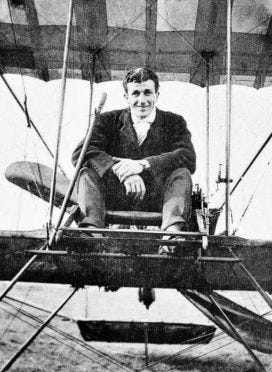
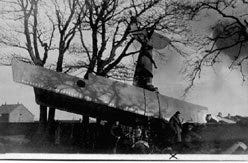
On May 27, 1913, 29-year-old Lieutenant Desmond Arthur went up in a B.E.2 biplane at the RAF Montrose (now the Montrose Air Station Museum) in Angus, Scotland. At around 2,500 ft, one of the plane’s wings folded up. It isn’t clear whether Lt. Arthur was thrown or jumped from the plane. Either way, he fell from 2,000 ft and died instantly, shattering every bone in his body and leaving an impression in the ground.

Lt. Arthur’s funeral attracted a lot of attention. This was the first air base in Great Britain, and the first airplane accident on the newly built base. After he was laid to rest, operations continued as normal until Autumn of 1916. After initially determining the cause of the crash was an accident, rumors began that it could have been prevented if not for Lt. Arthur’s own reckless flying.

Around this time, nearly everyone located on the base, Desmond Arthur’s former home, had begun to see a full bodied apparition roaming around in full military flying gear. Each time, the apparition would disappear into thin air. Additionally, there was a general uneasy feeling among the soldiers. One even reported waking up startled in the middle of the night to find Lt. Arthur sitting at the edge of his bed, disappearing shortly after.

After more investigation, the military determined that the wing of the plane had been broken previously, and an unknown person had shoddily attempted to repair it. Neither the break nor the flawed repair were reported or documented, and Lt. Arthur could not have prevented the accident.

The official conclusion was published, and this led to the final sighting of Desmond Arthur in 1917, allegedly in the mess throwing papers on the fire. I’m not sure if the papers were related, but I’m choosing for my own fun to believe that the papers he burned were the records of his flying leading up to the accident to be reckless.

There is one more detail to Lt. Arthur’s story. On his shattered body, they uncovered a locket, cracked down the middle but mostly intact, with a young woman’s picture on it--presumed a girlfriend of Arthur’s. The girl was fourteen years old.

The good news is--her family confirmed that even though they had been out on a few dates, they were chaperoned at all times. Not great news, but it makes it a little easier to swallow.

Lt. Arthur named the girl in his will, leaving her the majority of his savings--around one million dollars. She grew up well taken care of and eventually married another RAF pilot, hopefully one her own age.

The story of Desmond Arthur is far from the last thing that occurred at the RAF Montrose. To this day, people claim to hear footsteps, door handles turning, and see unexplained specters of pilots and even planes. These sightings began with the onset of World War II and have continued ever since.

Although people are quick to label any apparition seen as Desmond Arthur, there is no definitive evidence there have been any real sightings of him since 1917.

Additionally, in 2008, a team of paranormal investigators checked out the museum. Although they came to no profound discoveries, they did determine that the reported sounds of old planes flying overhead are actually created by the sound of traffic passing over the nearby bridge.

The more recent haunting at the museum involving their World War II era home display interested me the most. In this small recreation of a 1940s home sits a radio that several witnesses claim will pick up broadcasts featuring Winston Churchill and often the Glen Miller Orchestra--broadcasts clear enough to be identified. They typically begin at random and last up to thirty minutes at a time.

It is important to note that this radio is not connected to electricity in any way. The haunting drew so much concern to the museum that technicians and radio experts were hired to investigate the radio. Technicians opened the back of it up and reported nothing but cobwebs and dust.

Other radio experts, on examination, could also find no explanation for the vintage broadcasts. They told the museum that it could be possible, if there was a powerful transmitter near the area. But, there wasn’t. They found no identifiable source. In fact, the radio was aging so quickly that plugging it in and turning it on would cause sparks to fly. It simply was not possible for the radio to pick up current broadcasts, let alone broadcasts from World War II.

Such is the story of Desmond Arthur and the Montrose Air Station Museum. It’s a location to put on a list, and since it seems there have been no investigations conducted publicly in the last seventeen or so years, it may still be a great area of research.

Sources/Further Reading:

Radio Ghost Mystery at Former RAF Station

Montrose Air Station Heritage Center

Sad Fate of Lieutenant Desmond Arthur

Ghostly Wartime Aviator Still Haunting Montrose